In December 2026, we plan to publish new Crossref Member Practices which will set out the standards we expect all Crossref members to meet. From August to October 2026 we are consulting with our members on a draft of these Member Practices. This blog provides the background to this, and explains how you can share your views.
The Crossref community in India is as diverse as the region that it represents, comprising 1605 members, 11 sponsoring organisations, and 5 ambassadors, who between them cover the length and breadth of this country. Between November 2025 and March 2026, we organised three webinars focused on supporting this community with best metadata and publishing practices. We collaborated with the Directory of Open Access Journals (DOAJ) and the Committee on Publication Ethics (COPE) to embed understanding of metadata’s role in the greater context of publishing integrity.
PID strategies are being written around the world right now, and the decisions being made will shape the scholarly record for decades. After 25 years running open scholarly infrastructure—now on behalf of 25,000 members in 167 countries—Crossref has an informed perspective on what those decisions should ideally rest on. Today we’re setting it out in our first position paper: Persistent identifiers in research infrastructure policy: the need for a holistic approach. You can read it online or download the PDF; it’s a 16-minute read.
Research is rarely limited to a single contributor performing a single role. Behind every research output are people contributing in various ways: software development, data analyses, methodology design, and much more. Often, the same person contributes in several of these ways. Until now, Crossref metadata could only capture part of that picture, but this is changing with Schema 5.5.
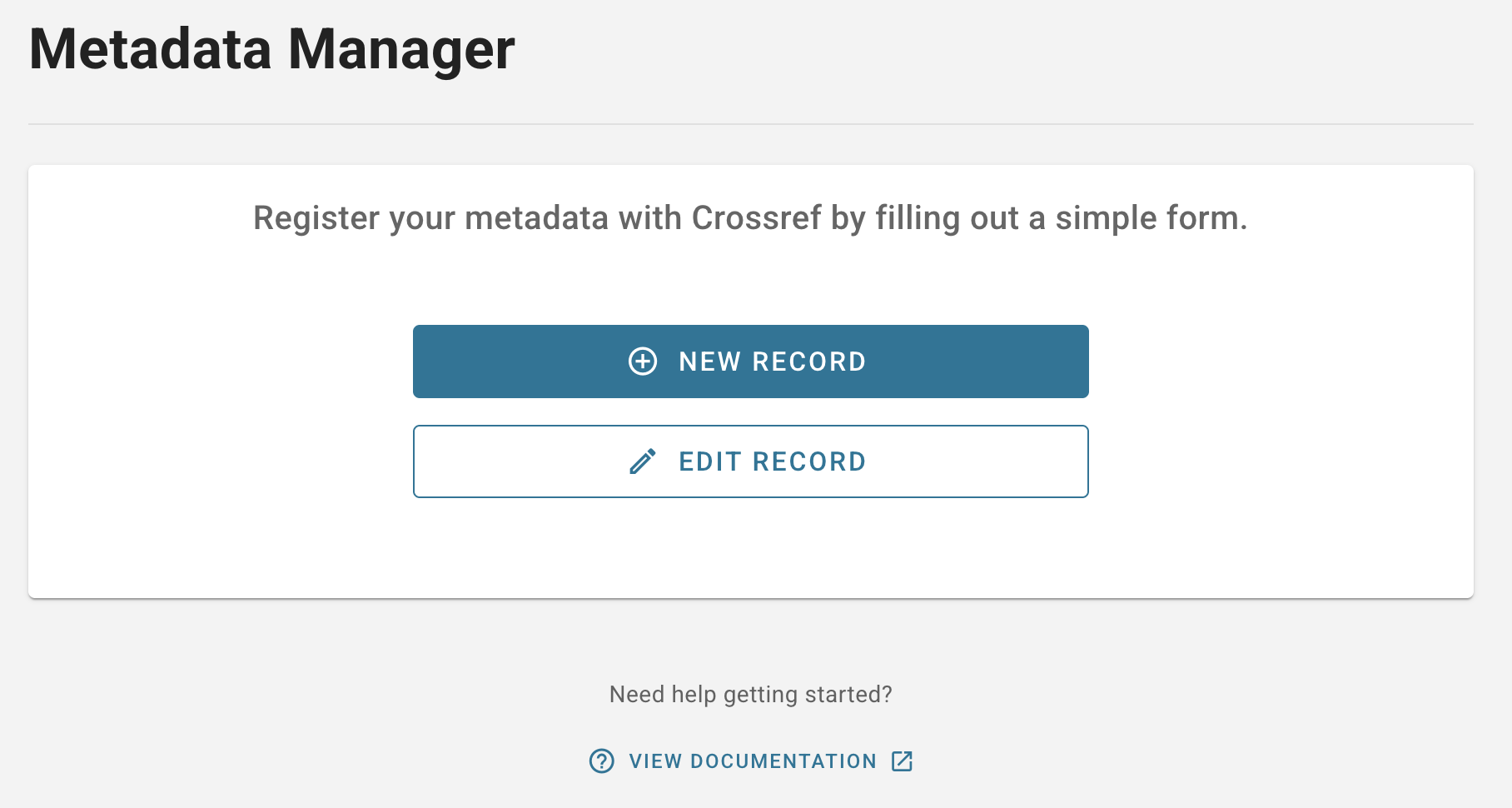
The new Metadata Manager tool (previously known as the record registration form) can be used to deposit metadata for your records. You do not need any knowledge of XML to use it. The tool currently supports registration of journal articles, reports, dissertations, grants, and post-publication updates (such as retraction notices) for journal content. We are planning to add support for additional record types in future.
Select the type of record you wish to create, then enter the metadata associated with your record in the corresponding fields. Some fields are required to be filled out in order to submit your record, while others are optional. You can find links to our documentation in the form for more information on what each field means.
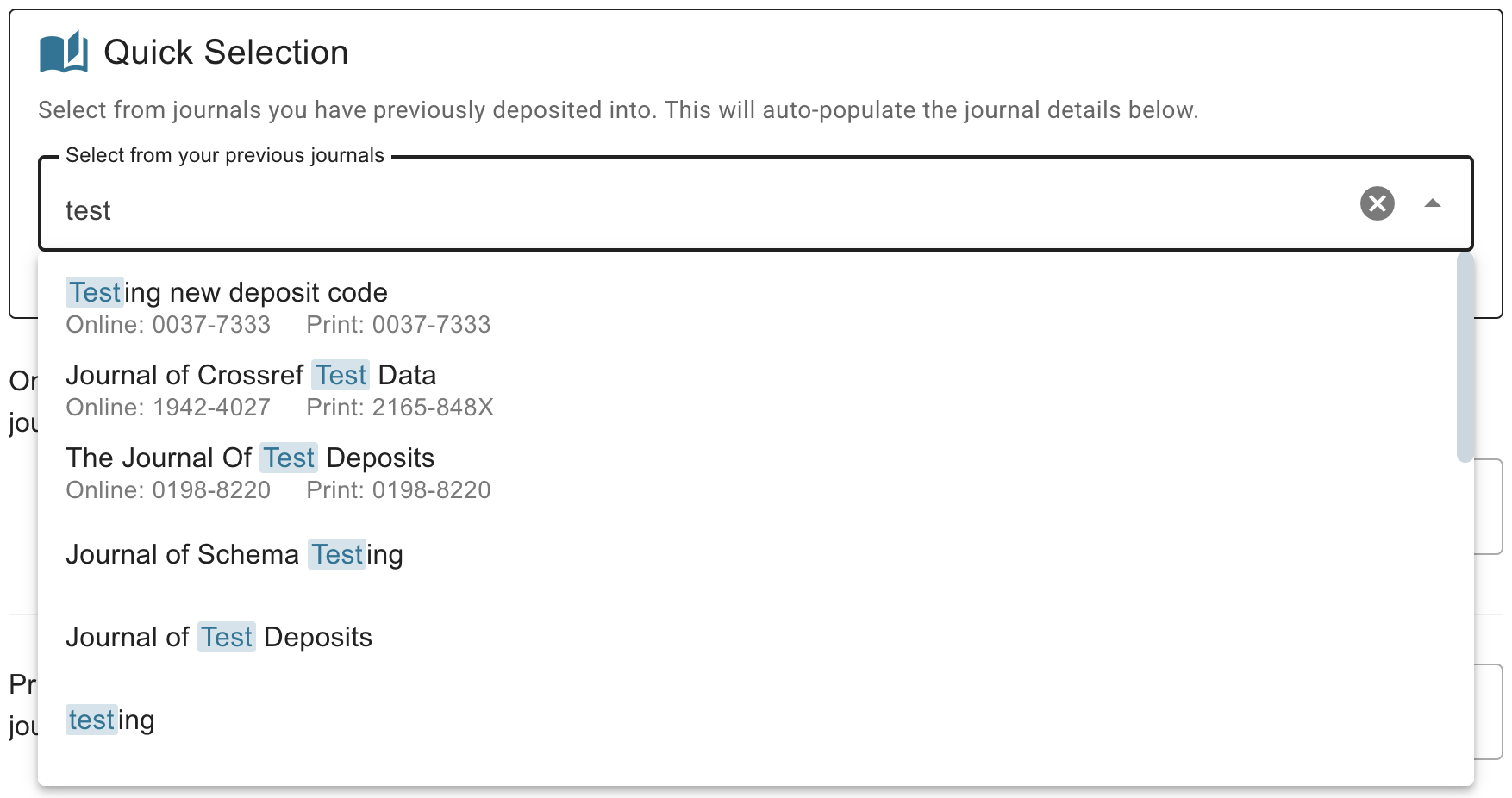
Journal article and post-publication update metadata also includes some information on the journal and, optionally, the issue and/or volume that the article was published in. To help avoid common errors with journal titles, you can auto-fill the journal metadata by choosing from a list of titles you have previously deposited into. You can search the list by title or by ISSN. Note that an ISSN is currently required to use the new Metadata Manager for registering journal content.
Submit your record
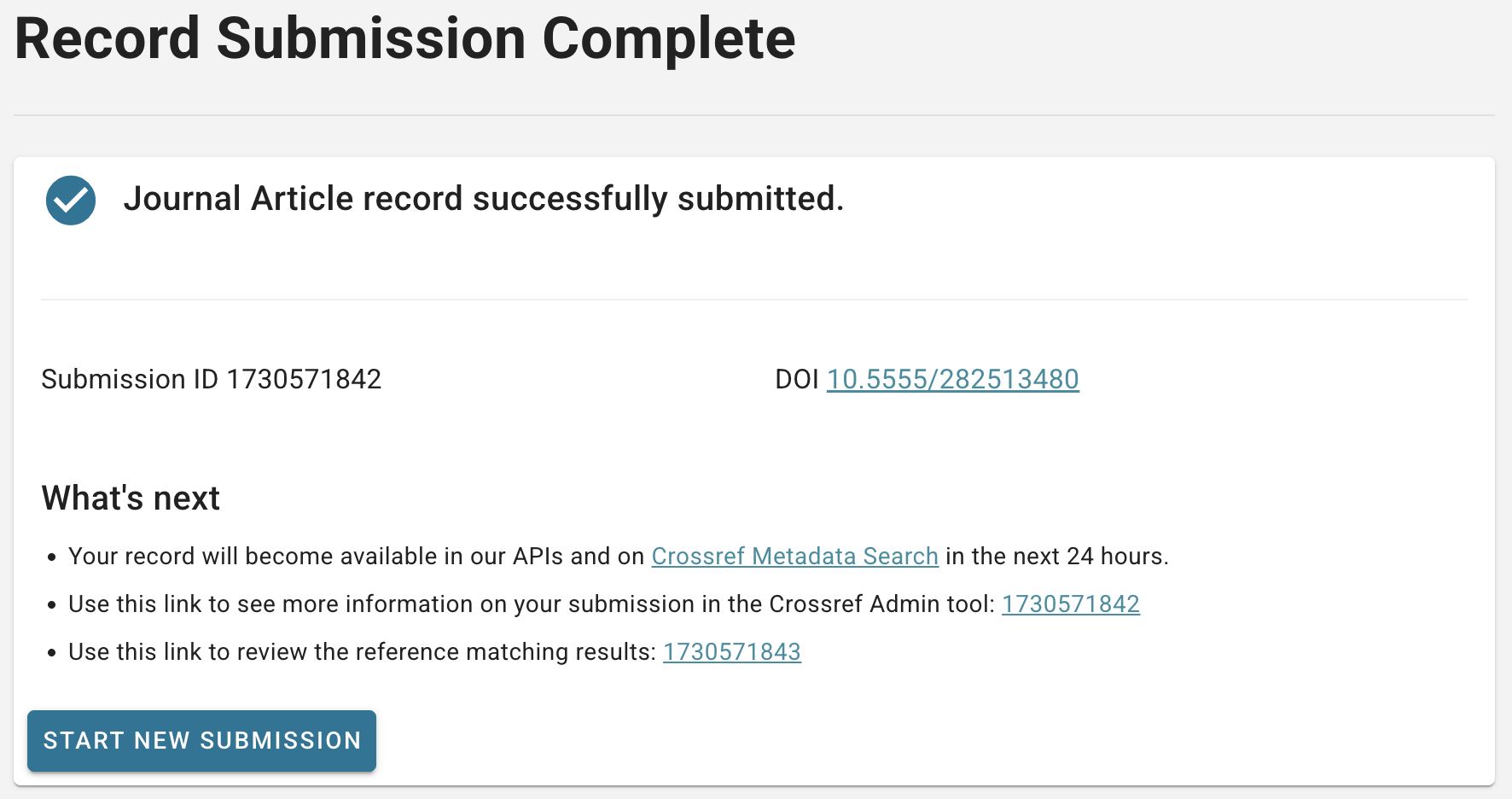
After filling out the required fields as well as any optional metadata you want to deposit, check that everything looks correct and then click Submit at the bottom of the form. The submission will be made immediately and a success message will appear on the screen.
From the success page, you can click through to more information about your submission in our Admin tool, or start another submission right away. If you have registered a journal article, you can choose to repeat the process for another article in the same journal and/or journal issue, which will pre-fill the form with the appropriate metadata so you don’t have to re-enter it.
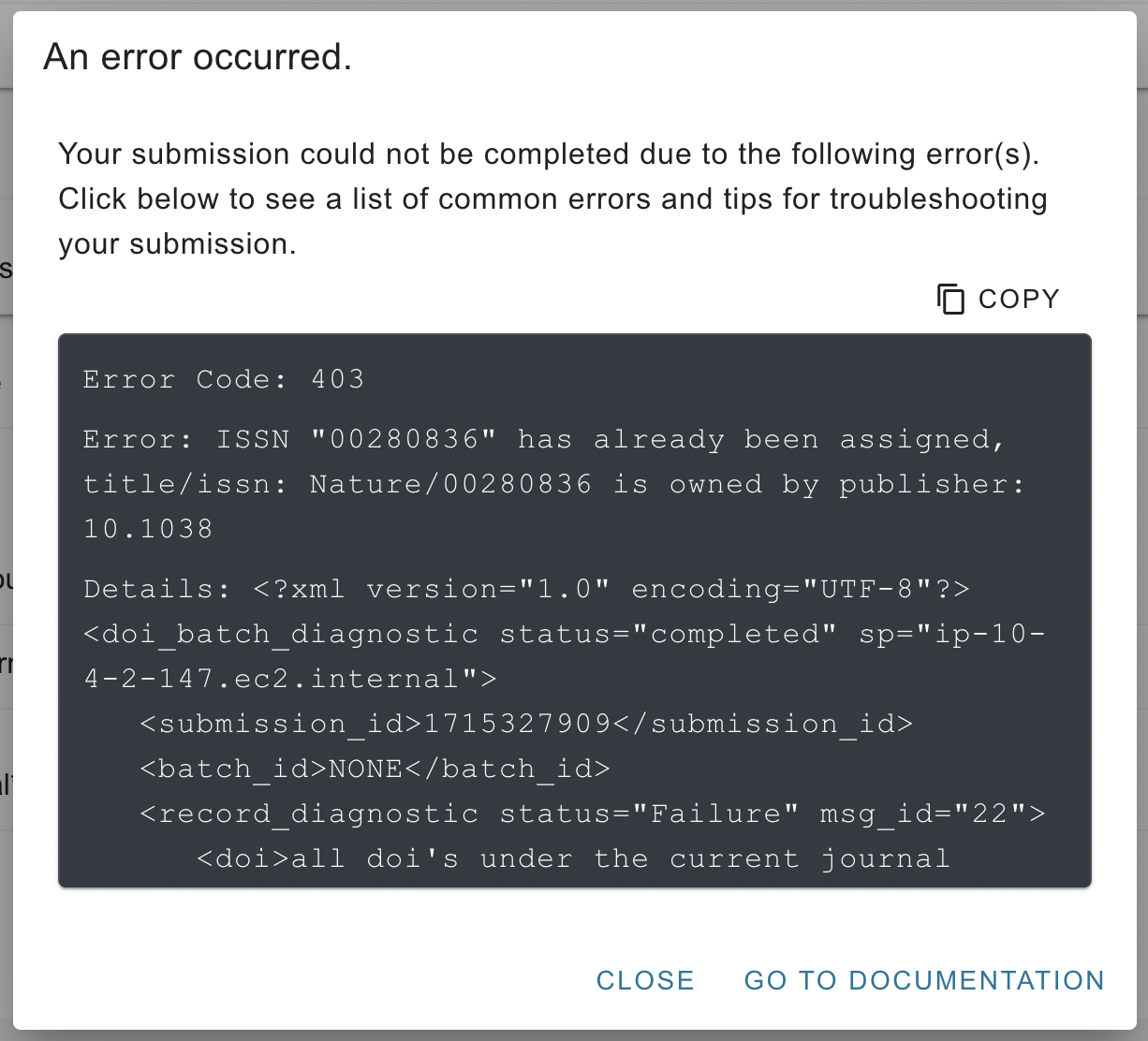
If there is a problem with your submission, you will see an error message appear instead of the success page. Go to the documentation for tips on how to troubleshoot common errors from our deposit system.
Edit an existing record
Metadata can change over time, and Metadata Manager allows you to update your records to reflect this.
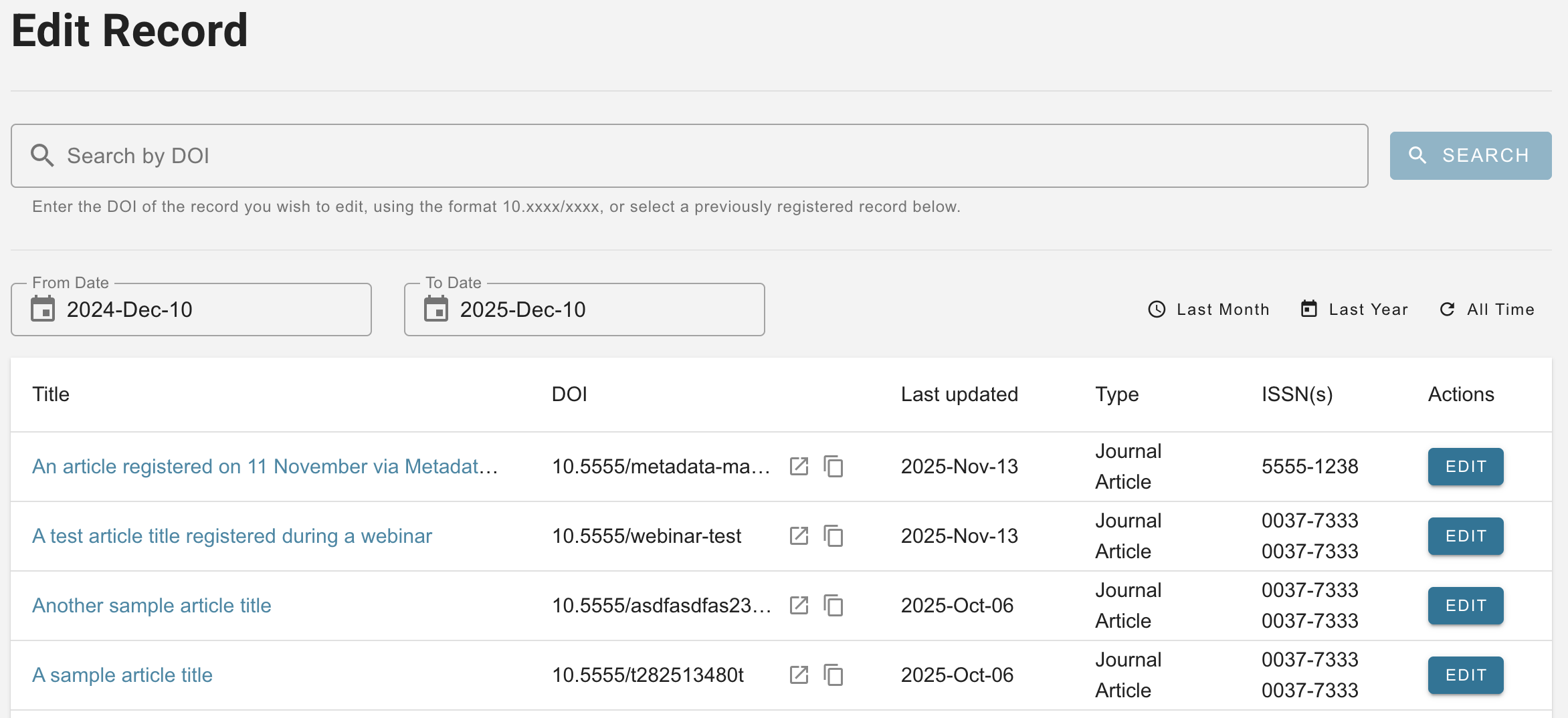
Choose Edit Record from the landing page or the sidebar navigation to see a list of the journal article and grant records you have previously registered using this tool, the web deposit form, or the deprecated legacy Metadata Manager.
You can search for any DOI, scroll through the list of previously registered records, or filter it by the date when the record was last updated. Find the record you are looking for and click Edit to access a form page with the record’s current metadata filled in. Simply make any changes and submit the record again to register the updated metadata. Note that post-publication update metadata can not currently be updated using this tool for technical reasons.
Page maintainer: Lena Stoll Last updated: 2026-June-18